
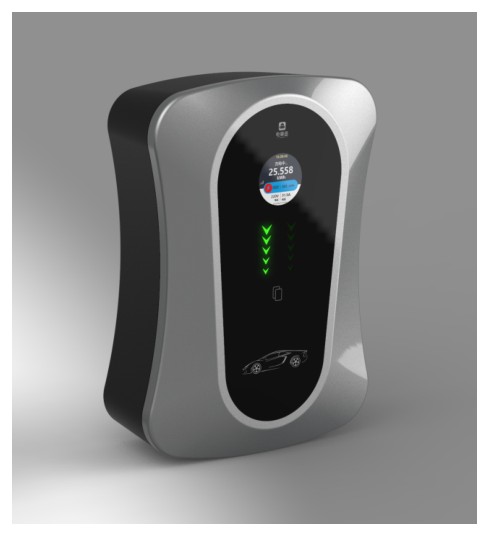
Choosing the right EV charging gun is the single most important decision for any EV charging product. Whether you are a manufacturer sourcing OEM parts, a distributor building inventory, or a fleet manager standardizing equipment, understanding the types, standards and compatibility will save you time, money and frustration.

What Is an EV Charging Gun?
An EV charging gun (also called a charging connector or plug) is the physical connector that links an electric vehicle to a charging station or power source. It carries the electrical current safely between the two.
A charging gun is not a simple plug. Inside the shell you will find power contacts sized for continuous current, a pilot or control pin that negotiates with the vehicle before any power flows, a locking mechanism that stops the connector being pulled out under load, and a temperature sensor that derates the current if the contacts get hot. Get any of these wrong and the connector will either refuse to charge or, worse, overheat.
The three things that actually define a charging gun are the connector standard, the current rating and the ingress protection class. Everything else — the handle shape, the cable entry, the branding — is cosmetic.
| Part | Function | Failure if wrong |
|---|---|---|
| Power contacts | Carry line and neutral current | Overheating, melted housing |
| Control / pilot pin | Handshakes with the vehicle before power flows | Vehicle refuses to charge |
| Locking latch | Prevents removal under load | Arcing, contact damage |
| Temperature sensor | Derates current when contacts heat up | Thermal runaway risk |
| Seals and gaskets | Keep water and dust out | Corrosion, short circuit |
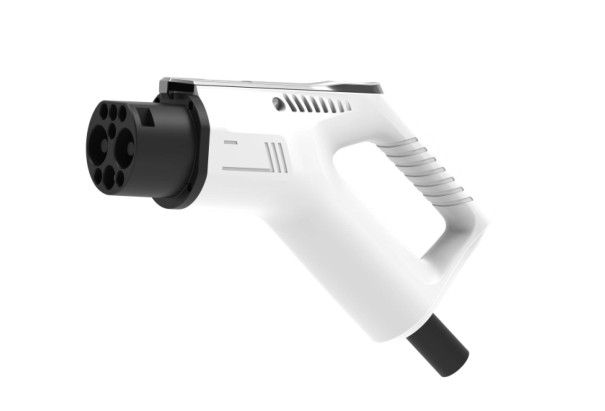
Main Types of Charging Guns
AC charging guns are used with alternating current and are common in homes, workplaces and slow-charging public stations. DC fast charging guns deliver direct current directly to the battery for rapid charging at public fast-charge stations.
The practical difference comes down to where the AC-to-DC conversion happens. With an AC gun, the charger inside the vehicle does the conversion, which is why AC charging tops out around 22 kW and needs a bulky onboard charger. With a DC gun, the conversion happens in the charging station, so the gun must carry hundreds of amps at up to 1000 V and is physically much larger and heavier.
AC charging guns at a glance
- Typical ratings: 16 A single-phase, 32 A single-phase, 32 A three-phase
- Voltages: 250 V AC single-phase, 480 V AC three-phase
- Typical charge speed: 3.6 kW to 22 kW
- Use case: home wallboxes, workplace charging, destination chargers
DC charging guns at a glance
- Typical ratings: 60 A to 500 A, with 250 A the most common commercial point
- Voltages: 200 V to 1000 V DC
- Typical charge speed: 60 kW to 240 kW
- Use case: public fast charging, fleet depots, highway corridors
There is also a third category worth knowing: the portable charging gun, sometimes called a Mode 2 connector. These attach to a normal domestic socket through an in-cable control box and are covered in our portable charger vs wallbox comparison.
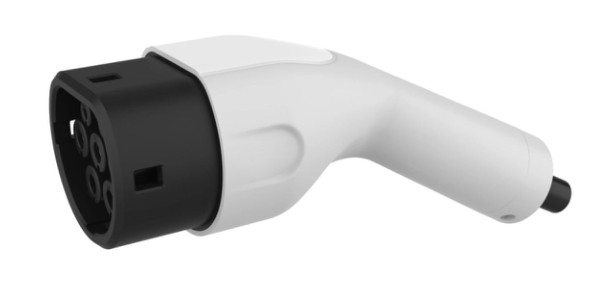
Global Standards Explained
- GB/T – China’s national standard, used across mainland China for both AC and DC charging.
- Type 2 (IEC 62196) – The European standard for AC charging, increasingly the global default.
- CCS1 / CCS2 – Combined Charging System, the dominant DC fast-charging standard in North America and Europe.
- CHAdeMO – An early DC fast-charging standard, still widely used in Japan.
- SAE J1772 – The North American AC standard.
| Standard | Region | AC / DC | Max typical rating |
|---|---|---|---|
| GB/T 20234.2 | China | AC | 32 A / 440 V |
| GB/T 20234.3 | China | DC | 250 A / 1000 V |
| IEC 62196 Type 2 | Europe | AC | 32 A three-phase |
| IEC 62196 Type 1 (SAE J1772) | North America, Japan | AC | 32 A / 240 V |
| CCS1 | North America | DC | 500 A / 1000 V |
| CCS2 | Europe | DC | 500 A / 1000 V |
| CHAdeMO | Japan | DC | 400 A / 1000 V |
For the full regional breakdown, including which countries have effectively locked in which connector, read our dedicated EV charging gun standards guide and the deep dives on CCS vs CHAdeMO vs Type 2.
The underlying specifications are published by the standards bodies themselves: IEC 62196-2 for Type 2, SAE J1772 for North American AC, and CQC for the GB/T scheme. For DC fast charging, CharIN maintains the CCS ecosystem specification.
Compatibility Is Everything
Before purchasing, confirm which standard your vehicles, charging stations and local regulations require. See our full EV charging standards guide for the regional breakdown. Buying the wrong connector means returns, delays and lost revenue.
What to check before you order
- Vehicle inlet. The car’s socket is the fixed constraint. Everything upstream must match it.
- Station outlet. A GB/T station cannot accept a Type 2 gun without an adapter, and adapters are not permitted in many public installations.
- Local regulation. Some markets require the connector to be type-approved and listed. CCS2 is mandatory for new public DC chargers across the EU.
- Current rating. A 32 A gun on a 16 A circuit is a safety problem, not an upgrade.
- Ingress protection. Outdoor and fleet installations need IP67 at the connector face.
Common sourcing mistakes
The most expensive mistake we see is ordering a connector that is mechanically compatible but electrically under-rated. A 16 A gun will physically mate with a 32 A inlet, and it will work — until it does not. The second most common is confusing Type 1 and Type 2 because both look similar in photographs; Type 1 has a clip latch and five pins, Type 2 has a rotary lock and seven pins. Our standards guide covers the pinouts.
We manufacture both AC charging guns and DC fast charging guns to every major global standard, with OEM customization available. Need help choosing? Contact our factory team and we will guide you.
Frequently Asked Questions
GB/T dominates China, while Type 2 and CCS2 lead in Europe and CCS1 in North America. The right one depends on your target market.
No. Charging guns are standard-specific. Always match the gun to your vehicles and stations connector standard (GB/T, Type 2, CCS, CHAdeMO, SAE J1772).
Yes. DC guns carry high-voltage direct current directly to the battery and charge much faster, while AC guns handle slower alternating-current charging from the grid.
Yes. We supply OEM EV charging guns in all major standards with custom cable length, amperage and branding.
A quality connector is rated for at least 10,000 mating cycles. Our silver-plated copper contacts are tested to that figure, which is roughly a decade of daily use.
IP67 means the connector is dust-tight and can survive immersion in up to one metre of water for 30 minutes. It is the usual requirement for outdoor charging equipment.