
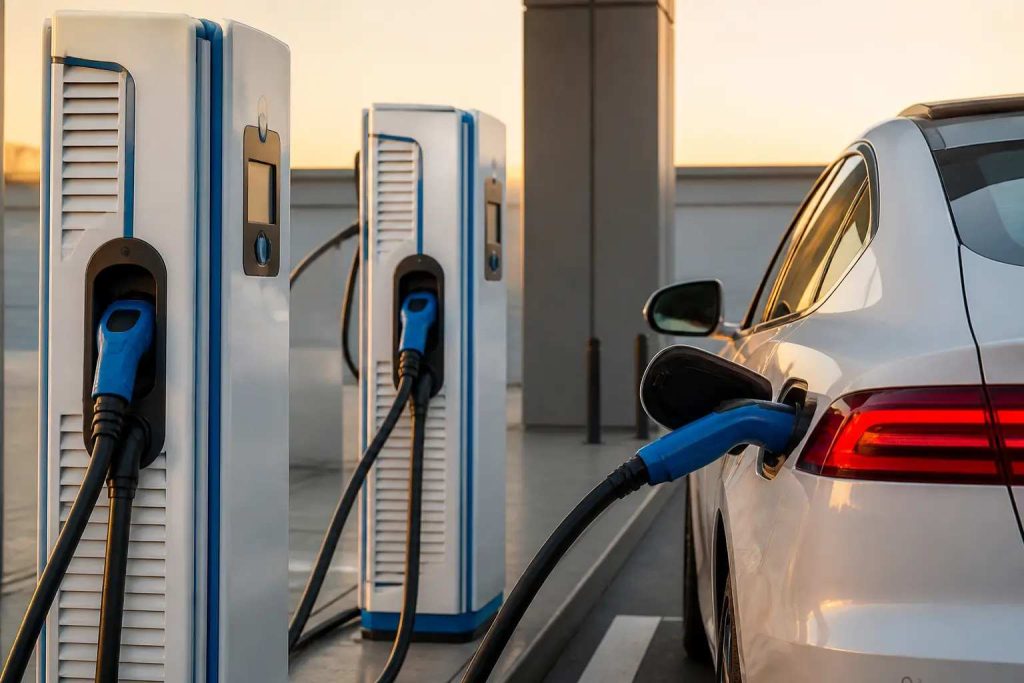
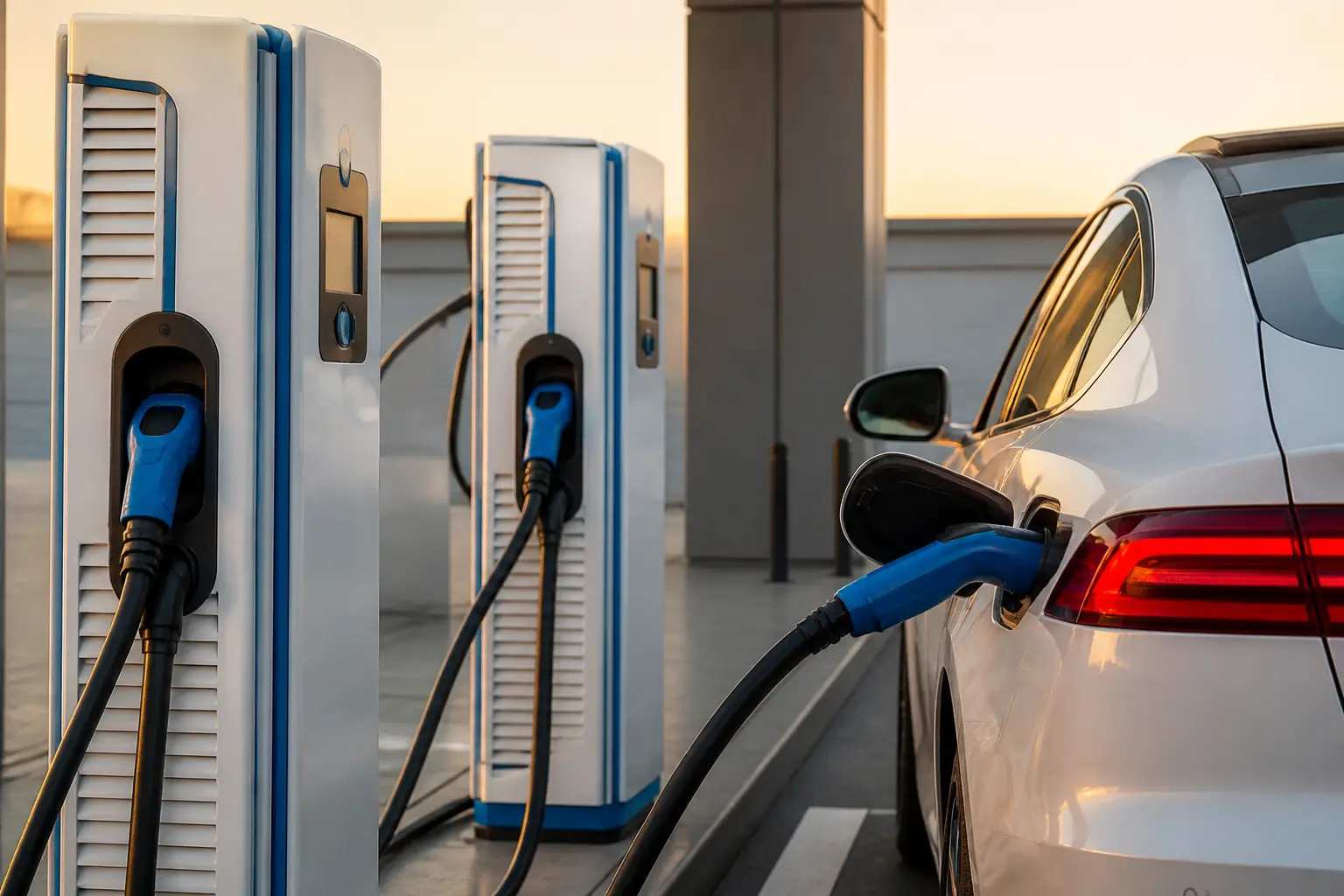
TL;DR: GB/T is China's national EV charging connector standard, covering both AC (GB/T 20234.2) and DC (GB/T 20234.3). It is the only mandatory standard for EVs sold in China and is followed by a smaller set of export markets. Outside China, Type 2 (IEC 62196-2, Europe/Asia) and CCS1 (North America) dominate. Below, we break down the connector types, the AC/DC split, the communication protocol, and what to know if you are sourcing GB/T chargers for resale or export.
What Is the GB/T Charging Standard?
GB/T is a series of Chinese national standards (Guobiao standards, literally "national standard") that define how EVs charge. The three most relevant for charging equipment are:
- GB/T 20234.2 — AC charging connector and cable (the seven-pin round connector)
- GB/T 20234.3 — DC charging connector and cable (the nine-pin round connector)
- GB/T 18487.1 — General AC/DC charging system requirements
- GB/T 27930 — Communication protocol between the vehicle and DC charger (CAN-based)
Together they cover the full charging stack: physical connector, electrical limits, control pilot, and the digital handshake that lets the car and charger talk.
GB/T Connector Types at a Glance
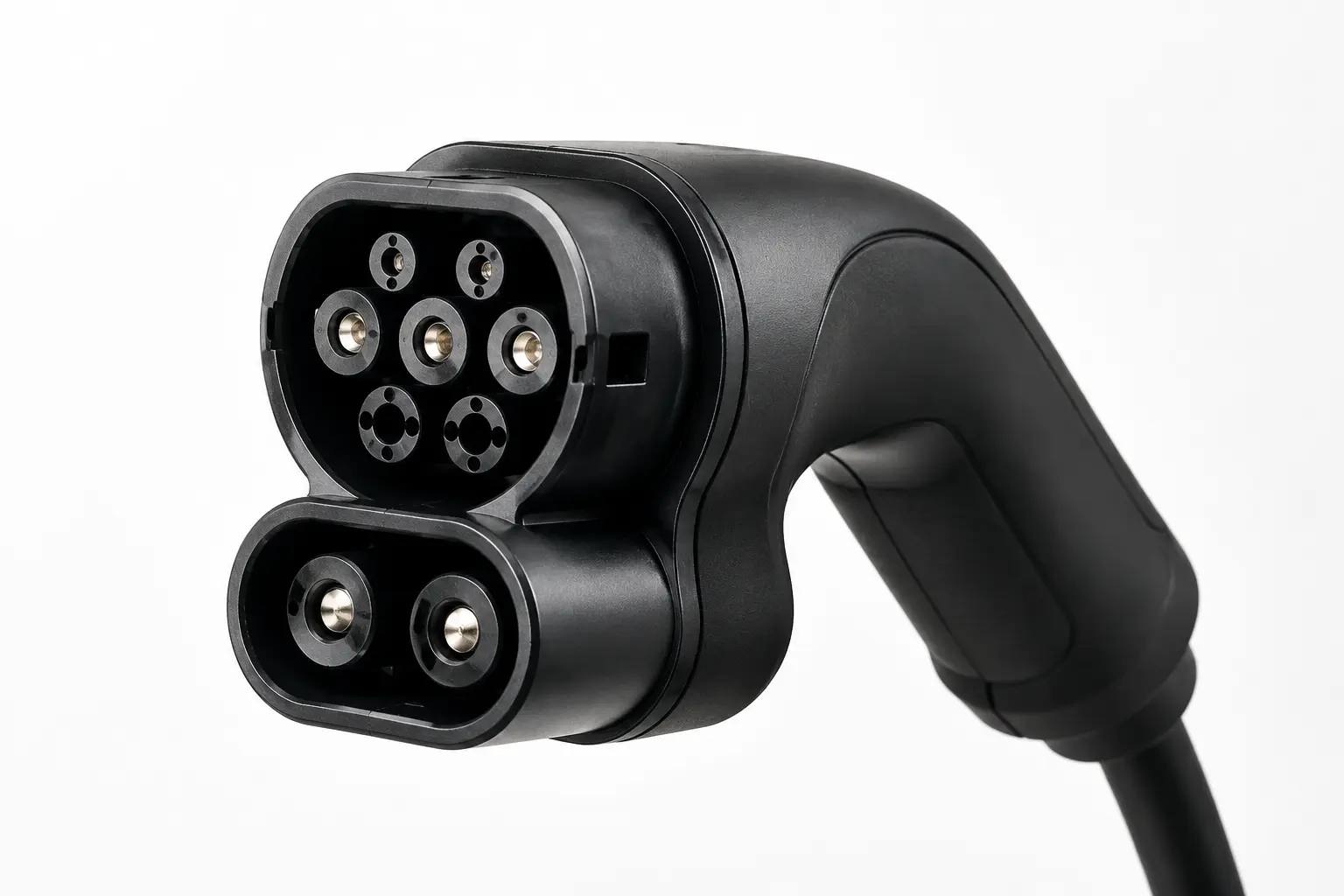
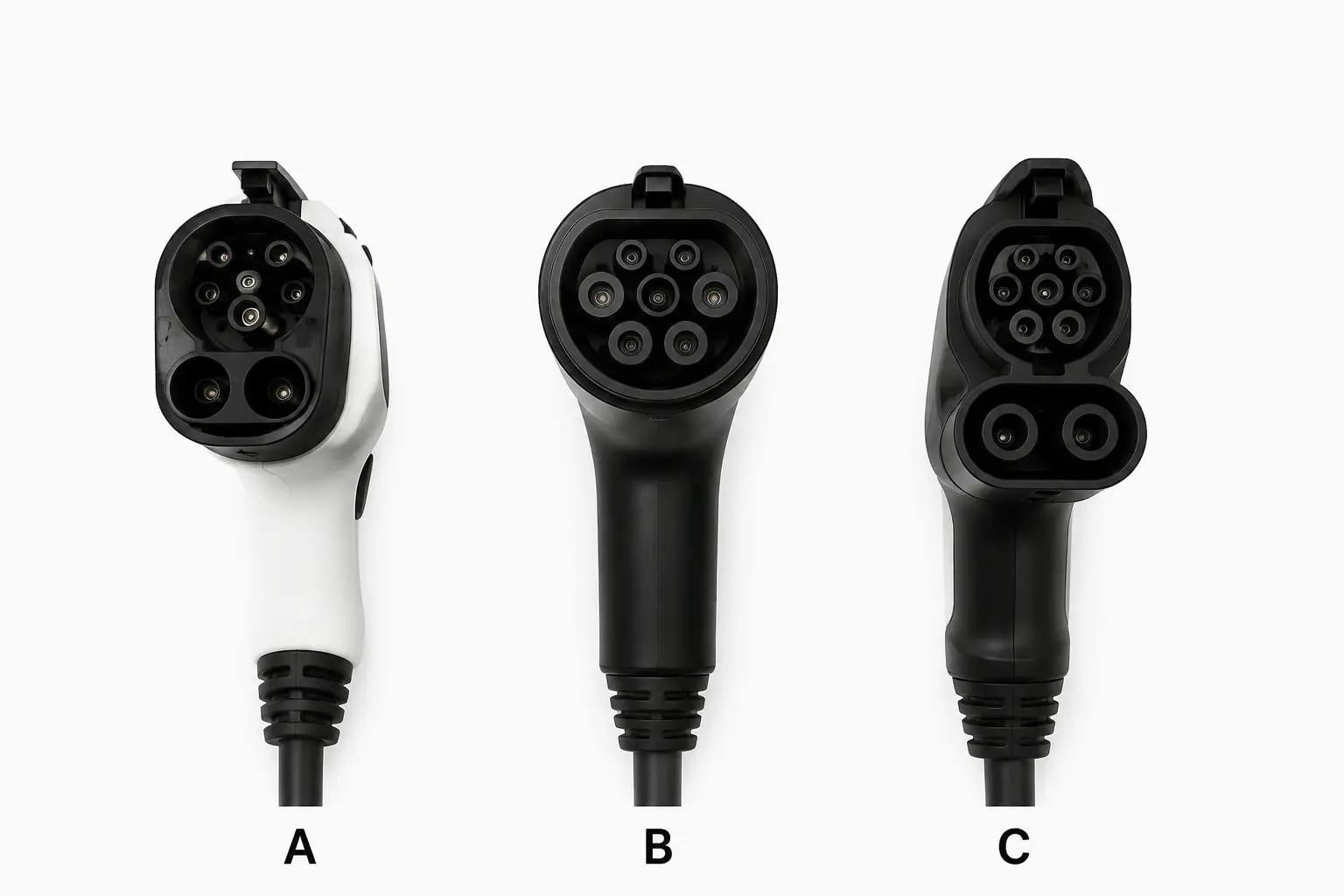
GB/T uses two distinct connectors — one for AC and one for DC. They look similar (both are round, both are large) but the pin count, diameter, and wiring are different, so they are not interchangeable.
- GB/T AC (20234.2): 7 pins, single-phase 250V or three-phase 440V, up to 32A per phase. Used at home wallboxes, workplace chargers, and most public AC stations in China.
- GB/T DC (20234.3): 9 pins, up to 1,000V DC, currents from 80A (passenger cars) up to 250A or 400A (commercial vehicles). Used at highway service areas, taxi depots, and bus terminals.
Both connectors support a control pilot (CP) signal and proximity detection (CC) so the car and charger can handshake safely before energizing the cable.
AC vs DC Under GB/T
GB/T follows the same AC/DC logic as Type 2 / CCS, just with its own connector geometry:
| Specification | GB/T AC (20234.2) | GB/T DC (20234.3) |
|---|---|---|
| Where conversion happens | Inside the car (onboard charger) | Inside the station |
| Typical power | 3.3 – 22 kW (single and three-phase) | 30 – 250 kW passenger; up to 400A commercial |
| Voltage | 250V single / 440V three-phase | Up to 1,000V DC |
| Charging speed (60 kWh, 10–80%) | 4 – 12 hours | 20 – 60 minutes |
| Connector pins | 7 | 9 |
| Communication | Control pilot (PWM) | CAN bus (GB/T 27930) |
| Use case | Home, workplace, overnight | Highway, depot, fast turnaround |
GB/T vs Type 2 vs CCS
GB/T is geographically tied to China (and a handful of nearby markets). If you sell or source outside China, here is how it lines up against the other major standards, published by IEC and SAE respectively:
| Region | AC Connector | DC Connector |
|---|---|---|
| China | GB/T 20234.2 | GB/T 20234.3 |
| Europe + most of Asia | Type 2 (IEC 62196-2) | CCS2 (IEC 62196-3) |
| North America (most OEMs) | Type 1 (SAE J1772) | CCS1 (SAE J1772 Combo) |
| North America (Tesla + Ford/GM/Rivian) | NACS | NACS |
| Japan + legacy markets | Type 1 (SAE J1772) | CHAdeMO |
Adapters exist for some cross-pairings (notably GB/T to Type 2 AC for older imports), but they are not universal and should not be the default for new deployments.
Who Uses GB/T?
- China (mainland): mandatory for all EVs and DC fast chargers sold domestically. The MIIT (Ministry of Industry and Information Technology) requires GB/T compliance for vehicle homologation, certified through CQC.
- Hong Kong and Macau: follow GB/T, with some local installation variants.
- Some export markets: select ASEAN, Central Asian, and Belt-and-Road destinations accept GB/T equipment, though Type 2 is more common.
- Chinese-made EV exports: major Chinese OEMs ship GB/T-fitted vehicles to some markets, or ship both GB/T and Type 2 variants to allow flexible charging on arrival.
What to Check When Buying GB/T Chargers
Whether you are buying for personal use, for a fleet, or for resale, these five specs separate a well-built GB/T charger from a risky one:
- Connector + version match. Confirm GB/T 20234.2 for AC and GB/T 20234.3 for DC. Older references describing a different generation should be avoided for new projects.
- Look for evidence of safety testing. A genuine safety mark (such as a regional mark, test report, or declaration of conformity) should be present on the unit or in the documentation. A printed logo with no supporting paperwork is a red flag. Check the issuing body and validity of the test report.
- Control pilot and CAN bus compliance. For AC: PWM control pilot per GB/T 18487.1. For DC: CAN communication per GB/T 27930. Mismatched firmware is the most common reason DC charging fails to start.
- Rated voltage and current are real, not printed. A connector printed "250V / 32A" but actually built with thinner copper or undersized pins will overheat at sustained load. Look for clearly stamped ratings on the connector body and a manufacturer-supplied test report.
- Cable material and IP rating. For outdoor or public use, look for IP54 or higher on the connector and IP65 or higher on the station housing. TPU or TPE jacket resists oil, UV, and the daily wear of public use.
Sourcing GB/T Chargers: What an OEM Buyer Should Know
If you are sourcing GB/T chargers for resale, fleet deployment, or branded distribution, the GB/T market has its own quirks:
- Connector tooling is China-specific. GB/T pins, latches, and pin layouts are not the same as Type 2 or J1772. Make sure your supplier uses GB/T-specific molds and tests against the GB/T 20234.2 / 20234.3 reference gauges.
- Communication firmware matters. DC chargers need correct GB/T 27930 handshake firmware. Some suppliers offer "GB/T compatible" firmware that is not fully compliant and only works with a narrow set of vehicles. Insist on a current protocol version and a list of tested vehicle models.
- Minimum order quantity. GB/T AC products usually start at MOQ 100-300 pcs; DC stations often require 50-200 cabinets but with longer configuration review.
- Lead time. AC products typically ship 15-30 days after sample approval. DC stations with GB/T 27930 firmware, payment, and multi-port logic often take 45-90 days.
- Customization surface. GB/T AC chargers accept quicker customization: brand color, cable length, plug type, retail packaging, and private-label user manuals. DC stations typically need deeper integration (firmware, app, OCPP backend) and therefore longer lead time.
For a broader guide to charging standards by region, see the EV Charging Standards Guide. For connector-by-connector comparison, see CCS vs CHAdeMO vs Type 2. For a head-to-head of portable vs wallbox, see Portable EV Charger vs Wallbox. For AC vs DC engineering, see AC vs DC Charging Guns.
Frequently Asked Questions
Is GB/T the same as Type 2?
No. Both are used for AC and DC, but the physical connector is different (GB/T has its own seven-pin and nine-pin designs) and the DC communication protocol is different (GB/T 27930 CAN bus vs. ISO 15118 PLC used by CCS). They are not directly interchangeable without an adapter, and adapters are only common in some markets for older vehicles.
Does GB/T work outside China?
Mainland China, Hong Kong, and Macau use GB/T directly. Some Belt-and-Road and ASEAN destinations accept GB/T equipment, but Europe, North America, Japan, Korea, and most of Asia-Pacific do not. If you are exporting, confirm the destination country's standard before you ship.
Can a Type 2 car charge at a GB/T station?
Usually no, unless an adapter is available and the vehicle side accepts GB/T handshake. Adapters exist for AC (GB/T 20234.2 to Type 2) but are uncommon for DC. For a new installation, match the connector to the vehicles that will actually use it.
What does GB/T 27930 do?
GB/T 27930 is the communication protocol used during DC charging between the vehicle and the charger. It defines the CAN-based messages exchanged for handshake, parameter negotiation, charging loop, and stop. If the firmware is not current, the car may refuse to start the session.
Is GB/T being replaced by CCS or NACS?
No, not in China. GB/T remains the mandatory national standard and the MIIT continues to update it. Outside China, GB/T has limited adoption. Chinese OEMs exporting vehicles often offer both GB/T and Type 2 / NACS variants so the same platform can sell in multiple regions.
Can GB/T chargers be customized for my market?
Most manufacturers offer common customization options: housing color, cable length, plug type, retail packaging, and private-label user manuals. For DC stations, customization extends to OCPP version, payment terminal integration, and screen branding. For deeper changes – firmware features, app integration, or new payment rails – lead time and cost rise. List your target market, expected volume, and any vehicle compatibility requirements when you request a quote.