
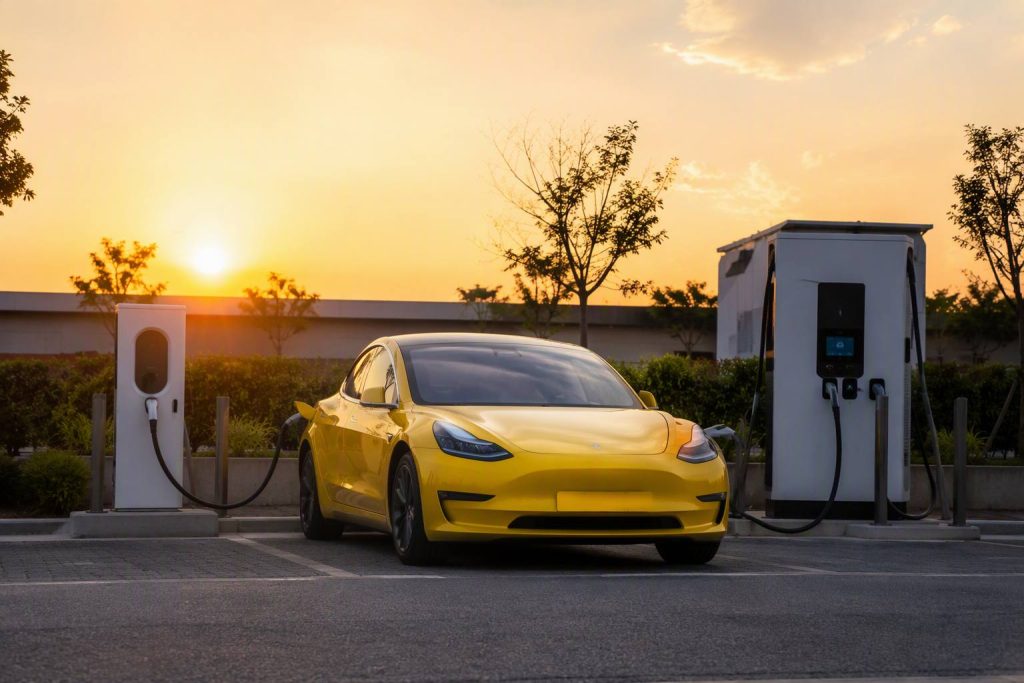
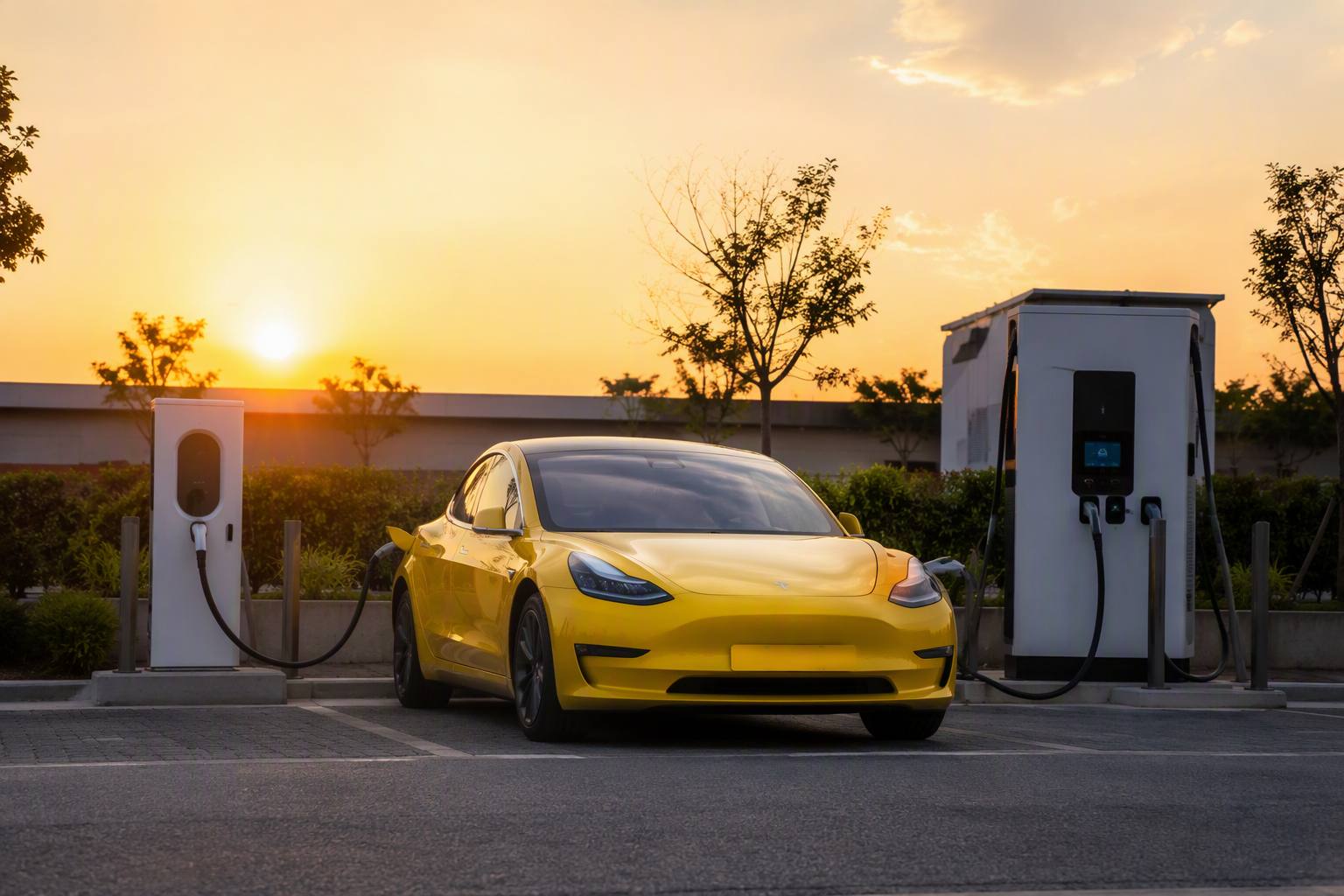
TL;DR: AC and DC charging solve the same problem in different ways. AC delivers power from the grid to the car’s onboard charger, which converts it to DC before storing it in the battery. DC fast charging skips the onboard step and pushes current straight to the battery. AC is cheaper and ideal for home or workplace charging where vehicles park for hours; DC fast charging fills batteries in 20-40 minutes and is essential for highway corridors and fleet depots. Most EV buyers need both — a Level 2 AC charger for daily use and access to DC fast chargers on long trips.
1. The Short Version — AC and DC at a Glance
If you only remember three things from this article, make them these: the grid supplies alternating current (AC); EV batteries store direct current (DC); and the difference between AC and DC charging is where the AC-to-DC conversion happens.
AC charging sends power from the wall to the car’s onboard charger, a component that converts AC to DC and feeds the battery. DC fast charging builds that converter into the charging station itself, so high-voltage DC goes straight into the pack. That single architectural difference explains the speed gap, the price gap, and the cable-weight gap between the two.
If you sell, install, or source EV chargers, you already know the consequences: AC units are portable, cheap, and universal at home and the office. DC stations are heavy, expensive, and almost always fixed infrastructure at highways, dealerships, and fleet yards.
2. How AC Charging Actually Works (Level 1 & Level 2)
AC charging is the slow lane, but it is also the lane that handles roughly 80% of all EV charging sessions globally, because that is where cars spend most of their time: parked at home, in a workplace lot, or at a hotel overnight.
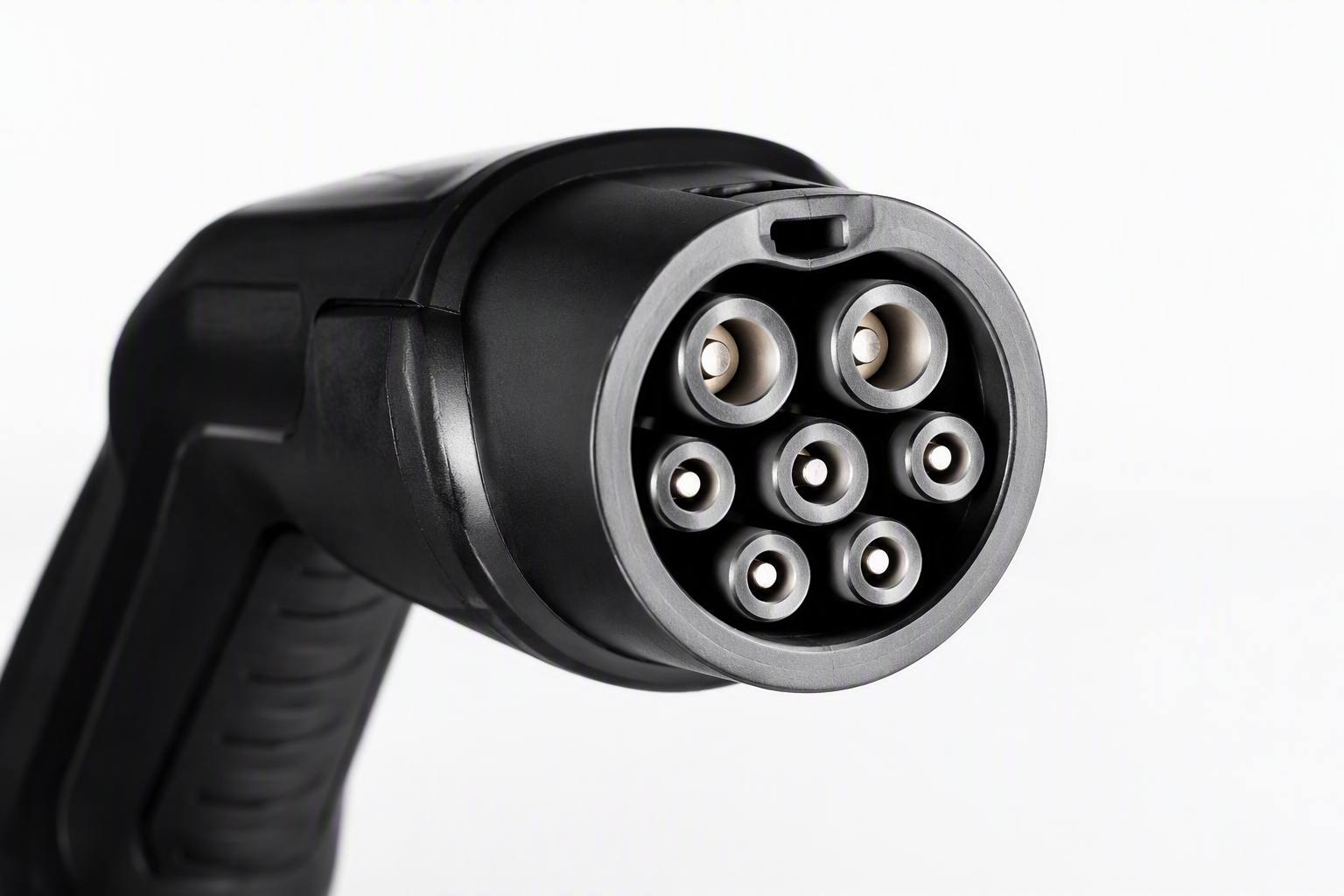
The U.S. Department of Transportation defines three levels. Level 1 plugs into a standard 120V household outlet and delivers roughly 1.4 kW — enough for emergency top-ups, painfully slow for daily use at 40-50+ hours to fully charge a long-range EV. Level 2 uses a 240V circuit (the same kind your oven or dryer uses) and delivers 3.3 to 19.2 kW depending on amperage, which most manufacturers ship at 32-48 amps. A typical Level 2 charger fills a 60 kWh battery overnight in 6-10 hours. The U.S. Department of Energy publishes the official charging level definitions in full.
Europe and much most of the world runs on three-phase power, which is why European AC chargers commonly quote 11 kW or 22 kW instead of the 7 kW / 9.6 kW numbers you see in North American marketing. A typical European EV accepts 11 kW on AC, with only a handful of vehicles (older Renault Zoe, Smart EQ, certain Tesla Model S / X variants) accepting the full 22 kW. The vehicle’s onboard charger is the bottleneck: a more capable AC station cannot push more power than the car is built to accept.
3. How DC Fast Charging Works (Level 3)
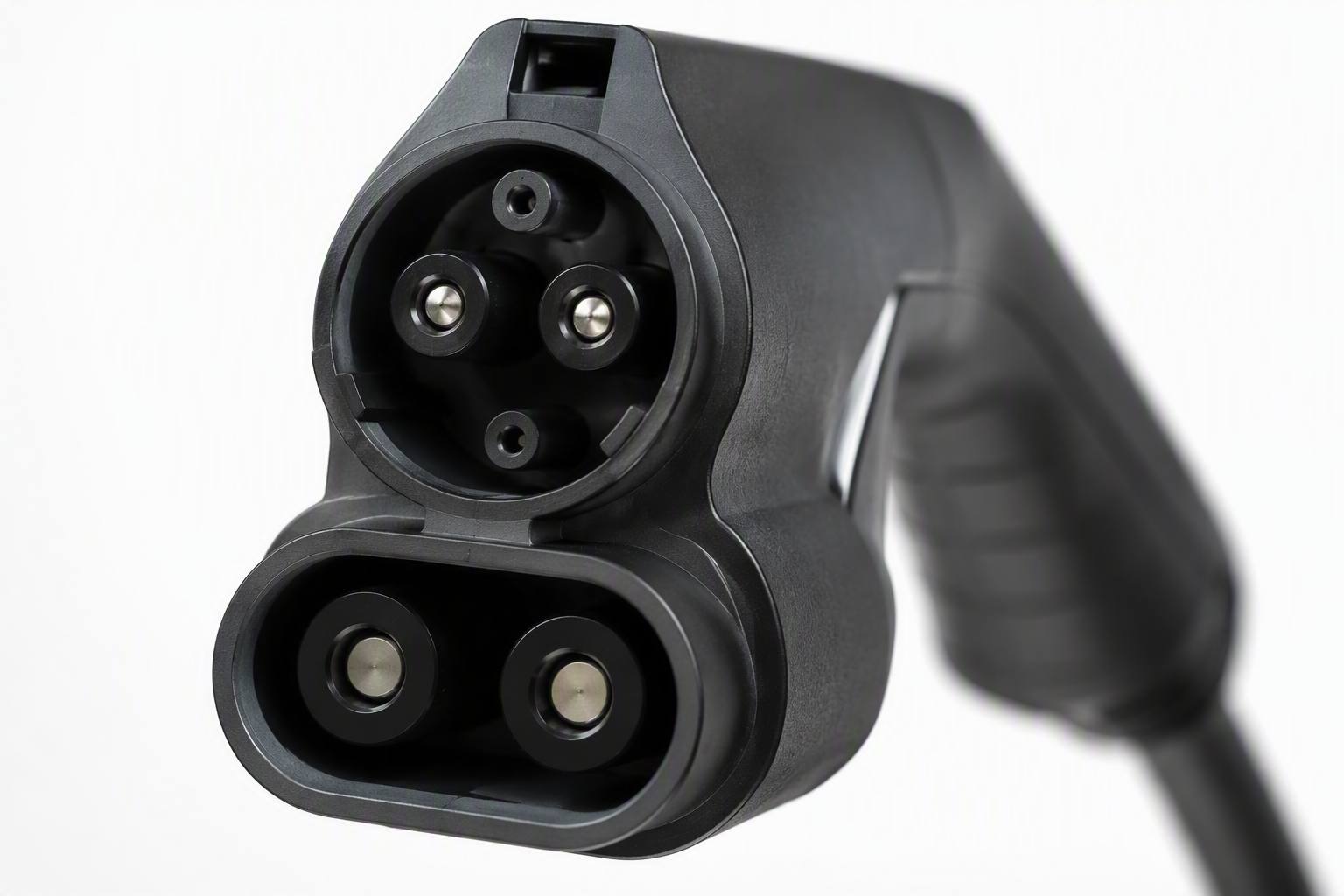
DC fast charging, often called Level 3 or just “fast charging,” moves the AC-to-DC conversion out of the vehicle and into the station. That lets the cable carry high-voltage DC (typically 200-1000 V) at very high current, which in turn lets a 50-350 kW charger add 10-80% of battery capacity in 20-40 minutes for most EVs on sale today.
The catch is that not every EV can drink at the same rate. A 50 kW DC station is the entry point; 150 kW is the mainstream for cars like the Tesla Model 3 Long Range and Hyundai Ioniq 5; 350 kW DC stations are reserved for vehicles built on 800-volt architectures (modern Ioniq 5, Kia EV6, Porsche Taycan, Lucid Air) that can actually accept that much current without throttling. Plug a 50 kW-capable car into a 350 kW station and the car, not the station, sets the speed.
DC fast chargers also need thicker cables, active liquid cooling in many cases, and dedicated three-phase grid connections — which is why they cost roughly 10x what a Level 2 AC station costs and almost never end up in residential settings.
4. AC vs DC: Head-to-Head Comparison
Here is how the two stack up across the dimensions that matter most when you are deciding what to stock or specify.
| Dimension | AC (Level 1 & 2) | DC Fast Charging (Level 3) |
|---|---|---|
| Where conversion happens | Inside the vehicle (onboard charger) | Inside the charging station |
| Typical voltage | 120-240V AC (single phase) or 380-415V AC (three phase) | 200-1000V DC |
| Typical power range | 1.4 kW (L1) to 22 kW (3-phase L2) | 50 kW to 350 kW (commercial), up to 600 kW in development |
| Time to add 200 miles of range | 6-12 hours (L2) | 15-30 minutes |
| Connector weight | 2-5 kg, light cable | 5-15 kg, often liquid-cooled |
| Station cost (rough order) | $300-$1,500 (home) to $3,000-$8,000 (commercial L2) | $30,000-$150,000+ per stall |
| Install cost | Low (240V outlet, or hardwired) | High (three-phase service, permits, utility coordination) |
| Best use cases | Home, workplace, hotel, multi-day parking | Highway corridors, fleet depots, urban fast-charge hubs |
| Grid impact | Modest — distributed overnight load | Heavy — often requires dedicated transformer or battery buffer |
| Battery wear (per kWh delivered) | Lowest | Slightly higher; minimized by staying below 80% SoC |
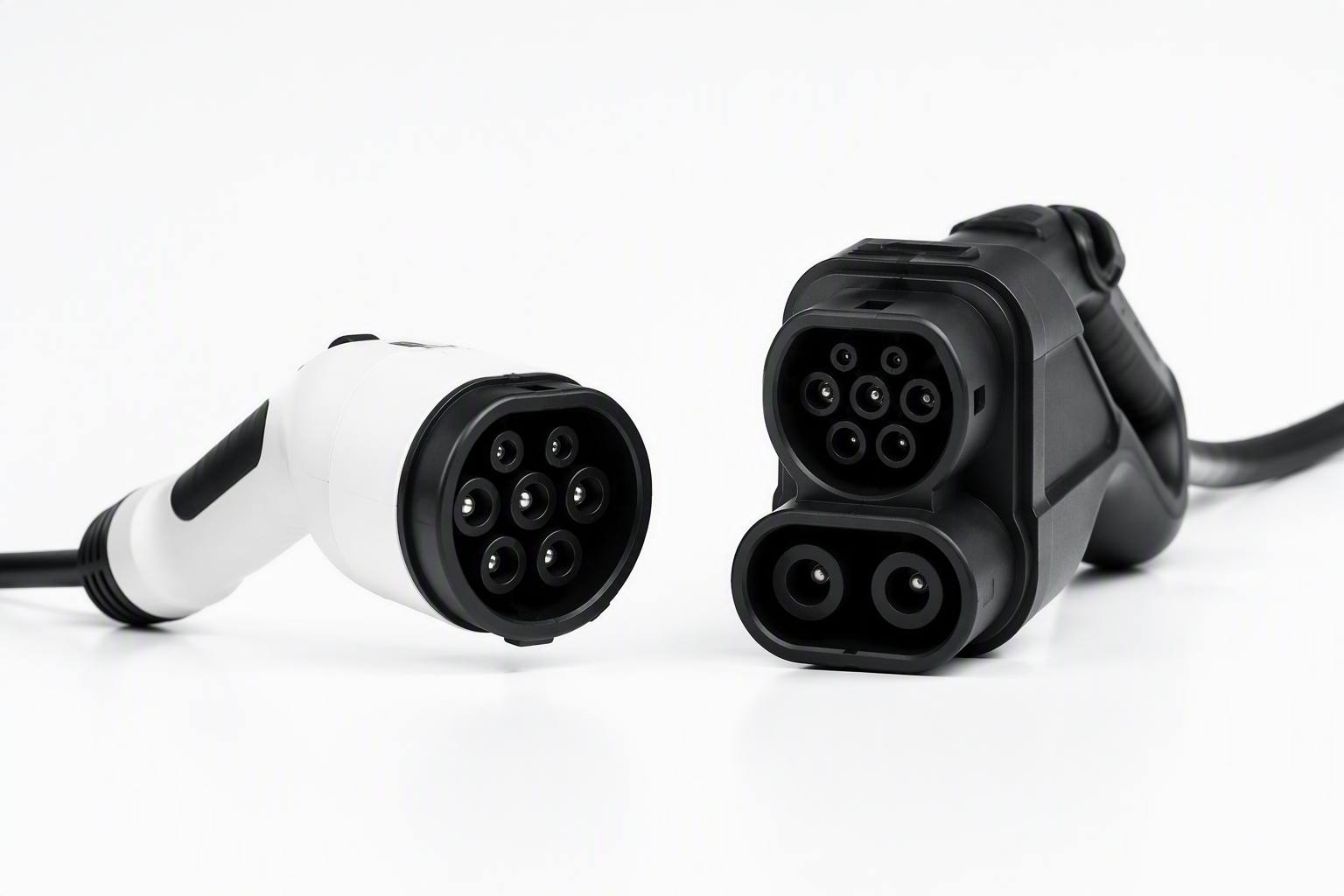
| Common connector types | Type 1 (SAE J1772), Type 2 (IEC 62196-2), GB/T 20234.2 | CCS1, CCS2, CHAdeMO, GB/T 20234.3, NACS / SAE J3400 |
5. Charging Time by Battery Size and Power
Time on charge is the number buyers actually care about. The table below shows ideal full-charge times at constant power; real DC sessions taper above 80% state of charge, so add roughly 20% to the DC columns.
| Battery | AC 7 kW | AC 11 kW | AC 22 kW | DC 50 kW | DC 150 kW | DC 350 kW |
|---|---|---|---|---|---|---|
| 40 kWh | 5.7 h | 3.6 h | 1.8 h | 48 min | 16 min | 7 min |
| 60 kWh | 8.6 h | 5.5 h | 2.7 h | 72 min | 24 min | 10 min |
| 80 kWh | 11.4 h | 7.3 h | 3.6 h | 96 min | 32 min | 14 min |
| 100 kWh | 14.3 h | 9.1 h | 4.5 h | 120 min | 40 min | 17 min |
Two conclusions follow. First, AC at 7 kW is adequate for anything up to about 60 kWh charged overnight. Second, the marginal value of moving from 50 kW to 150 kW DC is far larger than moving from 150 kW to 350 kW, because almost no vehicle sustains 350 kW across a full session.
If you are specifying the hardware side rather than the vehicle side, our AC charging guns and DC charging guns cover both ends of this table.
6. When AC Is the Right Choice (and When It Isn’t)
Pick AC when the car is going to be parked for at least an hour or two, when the install budget is modest, and when the grid connection is single-phase or residential three-phase without headroom. That covers the overwhelming majority of private and small-business charging: detached houses, apartments with allocated parking, retail stores, restaurants, hotels, and most office parking lots.
Skip AC when you need to turn vehicles around in under an hour, when you have a fixed three-phase service and want to push the absolute most power per parking space, or when you are installing in a corridor where drivers expect to be charged within the time it takes to grab a coffee. AC is also a poor fit for short-stop taxi or ride-share staging lots where dwell time is closer to 15 minutes.
7. When DC Fast Charging Is the Right Choice (and When It Isn’t)
Pick DC fast charging for highway rest stops, urban quick-charge hubs, dealerships and OEM experience centers, fleet depots that need fast turnaround, and any retail location where the dwell time target is under an hour. DC is also the only option when the vehicle’s onboard AC charger is so slow (a 3.6 kW onboard charger in a small city car, for example) that AC charging is impractical even overnight.
Skip DC when the dwell time is long, when the site cannot deliver the three-phase service a fast charger needs, or when the install budget cannot absorb the $30,000-$150,000+ price tag per stall plus ongoing demand charges from the utility. DC is also overkill for any single- or two-EV residential install; you will never recover the cost in charging fees.
8. Sourcing AC/DC Charging Guns: What OEM Buyers Should Know
If you are building a portfolio of EV charging products to sell into multiple regions, the connector matrix you need to cover is broader than the AC vs DC question. AC charging guns typically ship in Type 1 (SAE J1772, North America and Japan), Type 2 (IEC 62196-2, Europe and most of the world), or GB/T 20234.2 (China) — browse our AC charging guns. DC fast charging connectors are CCS1, CCS2, CHAdeMO (legacy Japanese standard, retreating from Europe and North America), GB/T 20234.3 (China), and NACS — see our DC charging guns. — Tesla’s connector, which the SAE standardized as J3400 in 2023 and which Ford, GM, Rivian, Volvo, and the Stellantis group have all committed to adopting.
Most OEM buyers we work with carry at minimum GB/T and Type 2 in their catalog, since that combination covers mainland China and the European Union — the two largest single EV markets by volume. North America (Type 1 / CCS1 / NACS) and Japan (Type 1 / CHAdeMO) come next in stock priority. Most EV charger manufacturers offer offer custom connector pin configurations for OEM clients; minimum order quantities typically run 100-300 units per SKU, with lead times of 30-60 days from PO to delivery depending on the connector type and cable spec.
One last thing worth flagging for buyers: common safety tests on EV charging guns include IEC 62196-1 mechanical and ingress tests, drop and vibration tests where applicable, and the relevant UL or TUV marks for the destination market. Always request the test certificates for the specific connector family you are ordering — there is meaningful variation in how strictly regional labs interpret the standards. For public DC deployments in the EU, the AFIR regulation also sets connector and payment requirements that go beyond the hardware standard itself.
9. Frequently Asked Questions
Most modern EVs include both an AC port (for Level 1 and Level 2 home and workplace charging) and a DC port (for fast charging on the road), though the connectors may share a single inlet on CCS-equipped cars. Some entry-level city EVs and PHEVs are AC-only and cannot use DC fast chargers at all.
Slightly, but less than most drivers assume. Independent studies (Recurrent, Geotab) consistently show that frequent DC fast charging accelerates battery degradation by roughly 0.1% on average compared with AC-only charging. The damage is concentrated at high states of charge — most fast-charging sessions now taper above 80% specifically to limit this wear.
Level 2 AC at 7-11 kW adds roughly 25-40 miles of range per hour. DC fast charging at 50-150 kW adds roughly 200-500 miles of range per 20 minutes of charging. The exact numbers depend on the vehicle’s maximum acceptance rate, the ambient temperature, and the battery’s state of charge at the start of the session.
No. Most modern long-range EVs do, but some entry-level EVs and most plug-in hybrids are AC-only. Vehicles built on a 400V or 800V architecture also vary in their maximum DC acceptance rate, even which the connector is the same.
Technically yes in some jurisdictions, but practically no. A 50 kW DC charger needs a dedicated three-phase commercial service, a permits process, and roughly $30,000+ of installed cost. For home use, Level 2 AC at 11 kW is more than sufficient for overnight charging of any EV on sale.
Yes. AC connectors include Type 1 (J1772), Type 2 (Mennekes), and GB/T 20234.2. DC connectors include CCS1, CCS2, CHAdeMO, GB/T 20234.3, and NACS / SAE J3400. Tesla vehicles in North America use the same physical connector for both AC and DC charging, which is unique among major standards.
Next Steps
If you are sourcing EV charging guns for OEM distribution, the fastest path is to share your target connector mix, target annual volume, and destination markets, then request a quote via the contact form with that info. We will come back with an MOQ range, lead time, and the relevant test certificates for each connector family.